Showing posts with label teaching. Show all posts

Thursday, August 25, 2011

Using Games to Teach: Through the Ages- A Story of Civilization

By Angie

The Big Idea:

Games are fun. They invoke optimism and curiosity, create systems in which it is ok to try new strategies, acceptable to make mistakes and to fail, and provide an environment in which to compete with others in healthy ways while developing and practicing a myriad of social skills. Games encourage us to enjoy time spent together socially while also critical thinking and doing what our brains love to do best: solving problems. Games help boost a sense of efficacy and inspire esteem, in a game you CAN accomplish great things, and believing in yourself is the foundation for all future successes. Regardless of their inherent “educational value”, games provide all of these amazing benefits and more. Many games also involve opportunities to learn and practice reading skills, language, vocabulary development, math concepts, and spatial relationships… to name a few! Games also provide meaningful opportunities to hone essential life skills such as thinking ahead, strategic planning, resource management, positive social interactions, conflict resolution, and teamwork. Some games model basic economic principles such as supply and demand, while others encourage players to evaluate multiple possibilities and decide on the best course of action, while still others demonstrate probability in action. Learning is everywhere in our lives, and games offer a very specific type of experience that is innately educational in all of these ways, and likely more that I haven’t listed here.

A basic concept of educational theory and pedagogy taught to teachers is that students learn best when they are engaged and interested in the material, and that a sound way to build engagement is to connect the material at hand to prior experiences or background knowledge. Effective teachers often build lesson plans that include “anticipatory sets”, activities designed to introduce students to concept and pique their curiosity, or review concepts previously learned. Effective teachers also find ways to connect the subject material in a personal way to the students, asking questions, invoking imagery, telling stories, and progressively building up ideas so that students understand not only the learning objective of the day, but the context in which it occurs.

So, here’s where I think a good number of modern board games can REALLY shine… many “off the shelf” games designed with optimal play experience in mind (not learning objectives or content standards!) can be used to introduce broad concepts to students and set up a base of knowledge and experience that will help cultivate curiosity and create connections. By interacting with game pieces and cards representing historical elements, playing through systems that are designed to emulate some of the important events and relevant themes, and experiencing fun and engaging game play centered around a specific time period, teachers can use games as an activity to help create an optimal learning environment that will motivate students to learn the content. The game doesn’t need to “teach” the concepts, just introduce them in a fun way, provide some interesting mechanics that encourage thoughtful decision making, and create an experience the players will remember.

This is a bit of a revolutionary idea, and it doesn’t necessarily integrate well into a typical classroom setting, however I think this is something worth exploring. Within the current educational climate, this idea could be implemented through parental interventions (play games with your kids!), afterschool board game clubs, through individual or small group tutoring sessions to help struggling students, and in libraries and other community outlets to enhance learning. Additionally, if time and resources allow, many games could be played in small groups in the classroom, or modified for whole group play. Games can be used to introduce a lesson block topic or could have entire lessons built around the concepts presented in the game. The point is to make the learning fun for the students and to engage them by activating their curiosity about a topic and providing relevant “experience” that can’t be easily replicated in other ways.

Forming connections with material is a key factor in retention and engagement, and playing games gives students a potential reason to care about a topic. Have you ever heard a student ramble off a giant list of stats and details about a game character they loved? Looking at ways we can use the power of games to interest students is an invaluable step in providing top notch engaging curriculum. Board games seem like an especially great avenue because they encourage social interaction and require the players to keep track of the game state information that is often hidden behind the scenes in video games, which can help provide a more solid understanding of the overall framework and enhance the learning capabilities.


An Example: Using Through the Ages


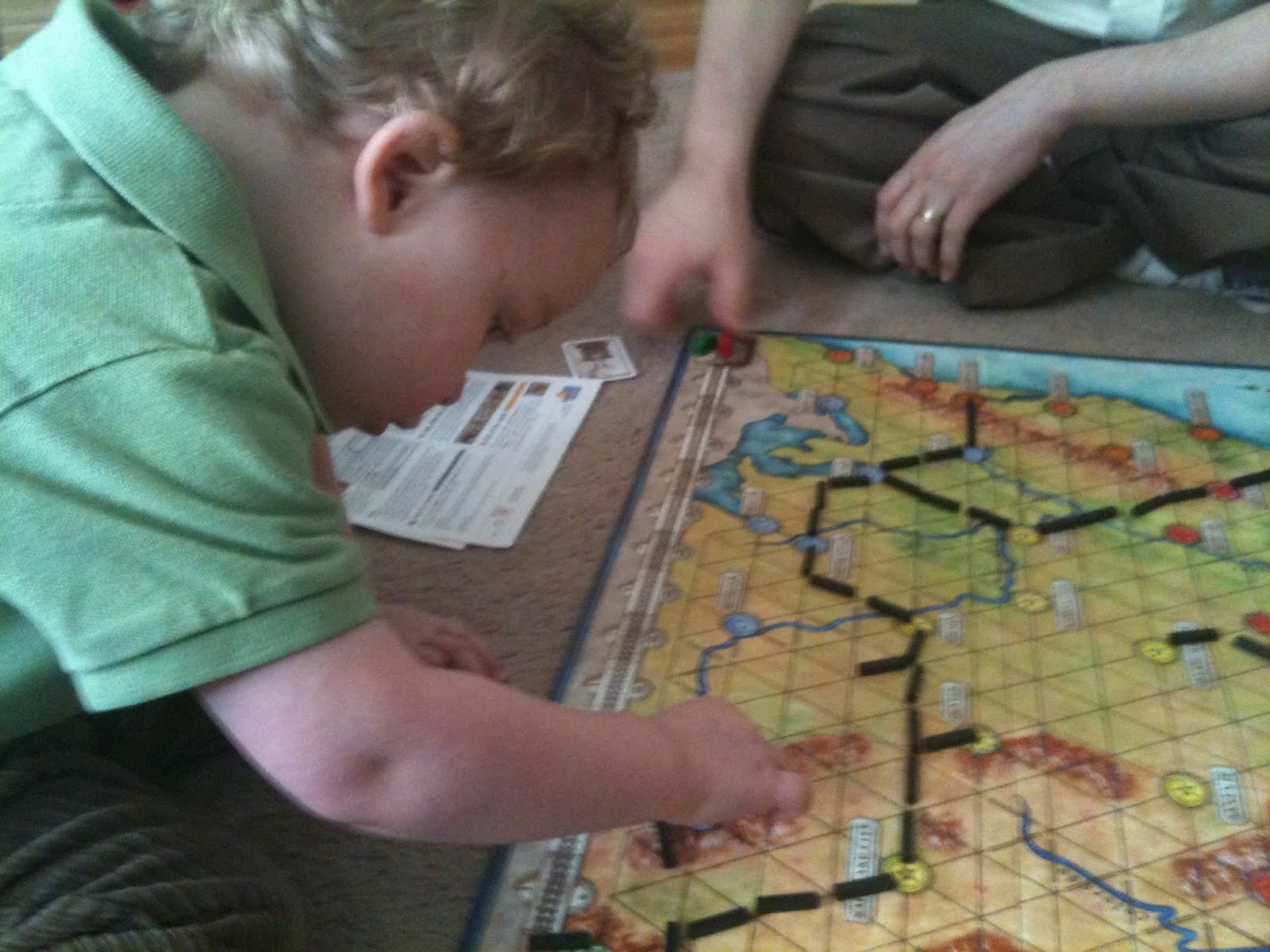
 Here are a few general ideas of how existing games could be used in this way with a complex game called Through the Ages. Through the Ages is an in-depth civilization building game by Eagle Games with a long play time that may make it challenging to use in a classroom, but it offers amazing potential to explore world history and provides a broad knowledge base upon which a teacher could build a vast array of lessons that connect back to the experience of playing the game.

As an introduction to world history, this game has mechanics that represent the how development of new technologies influenced the capabilities for food and resource production. It provides a wide range of historical leaders which each have game play mechanics that help reinforce the philosophies and tactics they are best known for. It uses wonders to present historical monuments, and again reinforces the theme through mechanics. This game provides a broad reference and jumping off point for many historical explorations, and it’s amazing strategic depth and game system really reinforce the theme well and provide an opportunity to practice many of the skills discussed above as well as cover a broad base of world history.


Playing through a game of Through the Ages can help provide an experienced base context for a wide array of lessons, and can inspire curiosity that will motivate students. “Who is Hammurabi?” “What is the Kremlin?” “Why does Genghis Khan give me a bonus to my horseman units?” On the flipside of that, playing a game that includes historical figures and places will provide something for a student to “latch” on to when they are learning about a topic. “Oh, Frederick Barbarossa? I remember him! He was my leader in that game we played and I got to turn my workers into military with him… that totally makes sense because he led his people into all those wars”. Educators can capitalize on this curiosity or reinforce these connections and make the experience richer and more educational.

 In addition to specific people and places, key concepts can be represented in a game in a way that allows students to experiment with these ideas and really get a grasp of how they work. For example, in Through the Ages technology advances such as the development of irrigation (then later selective breeding and mechanized agriculture) really affects the food production of a civilization, which influences the population level that can be sustained, the happiness of the people, and the ability to generate armies. These broad concepts can be emphasized by a teacher and used as a basis for lessons on how the availability of food has significantly impacted civilization growth, achievement, and conflict throughout history. With the experience of interacting within the environment of a concrete game mechanic, this concept can become much more tangible for students, and also far more interesting.

I could go a lot deeper into the specifics of this game, or the multiple "teachable" moments this might present so over the next few months I am planning to develop some of these concepts into curriculum ideas and discuss some specific games that seem especially suited for this purpose here on the blog. Feel free to comment or send any ideas or comments my way. I’d love to hear what other people think, how games have worked (or not worked!) for you in educational settings, and recommendations for games that can be used to teach “right out of the box”.

Sunday, May 22, 2011

Reasons To Play Board Games With Your Kids

by Randy
@coffeeswiller

I am a gamer. I have played games most of my life, and all of my adult life. Most of my gaming time is spent on board games, but I also play roleplaying games, card games, and the occasional video game. It's an excellent hobby and has made me many friends, including my wife. It has and continues to enrich my life in many ways; one of those ways is by sharing the hobby with my children. I'll tell you why.

Developmental

It's a proven fact that kids who play games are smarter; see the research. I definitely want my kids to have every developmental advantage and I fully believe that the type of reasoning that is necessary to play games will lead to creative and analytical ways of interacting with the world. Being able to weigh choices in the controlled environment of a game will help acquire the skills they need to succeed: resource management, weighing long term vs. short term investment, anticipating the actions of others. Exposure to these concepts early on will help them develop a more integrated and multi-faceted view of the world, be better problem solvers and and better at thinking ahead.


Social Benefits

In an age where communication is increasingly less face-to-face, it is more and more necessary for kids to learn social skills; board games are a great teaching tool. Not only are you sitting around a table with fellow players, you are in conflict with them in a standard game, or on a team with them in a cooperative game. It creates a slightly more complex and nuanced interaction with the people participating. This is a great teaching opportunity for concepts such as teamwork, civility, and the idea of being a good winner or loser. These are social skills that my children need, and will serve them well in their lives.

Family Bonding

Families need to do things together to be healthy; it's the basic premise of the much-used "Families who X together stay together" (replacing X with whatever activity supports your opinion). There's a reason people say that: families who bond by pursuing a pastime together tend to have more cohesion, and more common ground. Games are a great way to interact with children. For those of you familiar with the banking model of positive behavior support, games a great way to make "deposits" in the bank of trust for the parents ("withdrawals" happen when applying discipline). It's not hard to find articles on the benefits of playing games with your kids, if you look. And it beats the heck out of watching TV!


Exploration

Young minds need to explore and discover; their minds are little superprocessors cataloguing and interpreting what they interact with and their experiences. A game offers a lot of tactile experiences. Want to see some exploration? Open a game box and put it in front of a toddler and let her sift through (making sure to be aware of potential choking hazards). There are all sorts of amazing, brightly colored, and odd-shaped bits... possibly a board... and other things. Watching a little person look over each of the things, play with them, and make up ways to have them interact with each other is fascinating. Exploration is great. As an older kid, actually playing the game (as opposed to with it), and other means of exploration present themselves. Games offer contained little worlds to try different thing... a controlled environment where it is okay to fail without consequences. Being able to explore opportunities and not worry about the consequences of failure is one of the greatest parts of playing games, and cannot be understated.

Creativity

Kids are creative creatures, and love making art and participating in imaginative play. Games have creative and varied themes, and gaming with you kids may just add a little fuel to the fires of their imagination. For instance, after playing a game about horse racing, my daughter was inspired to draw a picture of a horse, and when I told her I was designing a game, she jumped in with a load of suggestions of her own. Additionally, I have seen my kids engage in imaginative play where they use words and concepts picked up from games. I personally believe that creativity is something to be nurtured and helped to blossom, and games are a great starting point for other forms of creativity.

Vocabulary

The acquisition of vocabulary in children is a big determiner of academic performance later in life. Games are excellent in that they often teach vocabulary indirectly in a fun way, and in a context where you learn related concepts. A game about exploration may teach words about exploring, expeditions, and idols, and a game about trains may talk about goods, passengers, and connections. And they learn about it in an active way, where they are relating it to actions that they take in the game. The research I've seen talks about quantity and quality of words a child hears in their early years, and playing games and discussing the concepts in games can certainly give them a boost.

It's Cheap!

Gaming can be a very cheap hobby, depending on how you go about it. A typical game costs about the price of taking the family to the movies, maybe even getting refreshments as well. A movie is over in a couple hours, but a game can be played over and over again. I cannot tell you how many times I've played my copies of Settlers of Catan or Attika; I can tell you that I have had so many hours of fun playing those games with family and friends that it's hard not to smile when thinking of playing them. It's true that you can go overboard and spend loads on games, but you do not have to. A handful of good games, purchased after reading reviews and possibly trying at the game store or with friends, is all you need. And if you really want to game on the cheap, keeping an eye on thrift store game shelves can turn up some gems at a small fraction of the price. I encourage supporting your lolcal game store, though, but other options exist.

They inspire *my* creativity!

Ever heard someone say, "Kids say the darnedest things"? Well, they do. They interpret the world through fewer filters than we adults and often come up with brilliant insights. Pay attention! Write stuff down, if you need to. I often find myself thinking about what one of my kids has said to me. And the better the input, the better the output. Show them a game about elves and dragons, they'll name them and talk about their mommies. Show them a game about aliens conquering worlds, they talk about making friends with them. Seriously... listen to them; you'll be surprised at what you hear.


Abstract Thought

Games, even non-abstract ones, usually have you manipulate things that represent other things. Little black cylinders can represent oil drums, cubes can be influence, and some things may not actually represent anything, like the stones in a Mancala game (before that one comes back to bite me, I'll just say that if they represent something, I don't know!). The concept that something can represent something else is a big cognitive leap, and games help introduce and reinforce this concept.

Lifelong Hobby

Gaming is a great hobby. It's an excellent pastime to share with your kids, and may even play a significant role in their life; it has in mine. Some of my best friends I have met through gaming, including my wife. Sharing something like that will mean that no matter what, you'll have something fun to share. And they'll likely pass it on to their kids. It's a great gift to give. And further, you may just end up with a new best gaming buddy, or that one extra person that you need to play your newest game!

Convinced? Check out what my wife Angie has to say about getting started gaming with your little ones for some practical advice about introducing kids to our favorite hobby. And leave us a comment, we love to hear from you!

Wednesday, February 2, 2011

Taking turns

by Angie

Here is a little clip of Jack playing a game with us. I am really proud of two things in this video....


First, isn't Katie the most patient big sister gamer ever? She demonstrates patience even when things look pretty grim ("Then I wont ever get a turn..") She really wants to let him explore the games, learn to love playing together, and have fun gaming. I was so proud she didn't reach over and take the dice from her brother. Go Katie!

Secondly, despite the fact that he didn't want to, Jack shared. He passed the last die over to Katie so she could have a turn... eventually! Good job buddy! We kept playing after this video, and each time around the table he was a little less reluctant to pass the turn along. He's learning, and we're proud of our little ones.

In case you missed it previously, or for more info on our philosophy about playing games with kids you can check out an archived article about it here. We're all learning to play together, and most of all having fun!

Please feel free to share your proud gaming moments with the little ones in your life, let's celebrate their developing generosity, patience, and good sportsmanship!

Saturday, January 1, 2011

Teaching Games to Kids

How did they do that?
My 5 year old daughter loves to play board games and card games. She has a goal to play 100 different games this year, and I’m so excited to try that with her. She likes writing her own reviews of games and talking about her thoughts on them, and she CAN’T WAIT until she can read all the cards in the “toughest” grown up games like Magic: The Gathering. Part of that is her personality for sure, but I’ve had a few people ask me how to get into playing games with their kids or how I’ve been so successful at playing complex games with her when she is so young. I thought I’d try writing down my ideas on the subject, hopefully there’s some piece of advice in there somewhere that someone can use. I’m writing in an authoritarian voice, but I’m absolutely no expert. My opinions are based on my parental experiences with my two kids and 10 or so years working with kids in various settings. These are just some ideas and strategies we’ve used or thought about, and they are mostly focused on young children (pre-readers) because that’s what we’ve got.
As always, take what you like and leave the rest.
10 Easy Steps... Haha… Nothing Is Easy With Kids!

1.       Cardinal rule: Don’t worry about the rules. The point is to have fun with your kids. There is honestly lots and lots of time to learn “the right” way to play the games, but first the kids have to learn to love playing them and get excited to try new games. Play games in front of your kids, and let them sit in your lap, hold your cards, move your pieces, pick a color, roll the dice, whatever, even if it’s only  for 2 minutes as their marching band parades through the room. Show them that playing games together is a fun and valuable use of time.

2.       One way to build focus and attention for gaming is to let kids play with you with games in whatever way is most appropriate and interesting to them. Start by getting out all the pieces and taking some time to look them over. The point is to sit with your kids and explore them together, so don’t worry about losing pieces… you’ll be right there with them, right? If your kid destroys the pieces or puts things in their mouth, wait a while or invest in some of the high quality wooden games out there that have pieces that are too big to eat and too sturdy to destroy. We’ve got a destroyer in the house, so we’re careful about which card games we play with the little Jack. As you play, try saying things like “Wow, dice, what should we do with these?” or ask questions like “Which side of the card should we use?” or “How do we get these guys to stand up?” Let the kids be the problem solvers, even if their solutions aren’t what you would normally come up with. It’s ok if they use dice to build towers or are more interested in the backs of the cards than the front.  Just remember, if all you do is get a game box out, look at all the pieces with your kid, and put if back in the box, you haven’t failed! You’ve succeeded at starting them down a path of learning to love games. 
"Chicken! Egg!"

 3.       Appreciate the art, the novelty, and the fun of the game. Get excited about the characters and feel free to play with the game like a toy. Watch what your kid likes to do with the pieces and use that insight to find good fits for future games. For example, if you get out Candy Land and your child just wants to match colors, then have fun matching colors with them, and store away that knowledge so that next time you can pull out a matching game like Memory instead. For example, my daughter uses this beautiful deck of Animal Rummy cards to play a game she created that seems to resemble Magic the Gathering (not too surprising, since we play it all the time). The animals line up in a row, you use cards of the same color to activate them, and then they tap to attack each other. I try to appreciate her ingenuity, creativity, and love for gaming and introduce her to other cards games she might like instead of getting bummed that we won’t be playing Animal Rummy anytime soon. 

4.       Try taking turns. Whatever you are doing, try staggering it into your turn/my turn patterns. Make sure they aren’t having to wait very long to do something, because that’s not even fun for us grown-up patient gamers.

"...and we could use these as stop signs..."

5.       As you play and enjoy the game pieces, gradually introduce new concepts that will form the basis for the game rules. You can roll a die and say “oh look, I got 4 spots on this die roll, what if I move this guy 4 spaces on this path. One-two-three-four.”  Or,  “Oh look, I have 4 of these stone cards, and no wheat. Do you want to trade one of your wheat cards for one of my stone cards?” Don’t push your kids to do the same, just model the ideas. Start introducing the actions and parameters that define the game in a fun way. Try not to put emphasis on “right” and “wrong“  ways to play. It’s pretty natural to get excited when your child starts coming up with their own ways to play that are very similar to the “real rules”, but try not to get disappointed if all they want to do is play their own way.

6.       Break down more complicated games into stuff your child recognizes. Come up with some fun mini-games using the game components that highlight some of the interactions and rules. For example, if your child knows how to play Memory and you want to teach them Settlers of Catan, you can play a memory matching game with the pieces. Place all of the hex tiles face down in the shape of the island and take turns turning them over. Whenever you get a match, you collect a resource card of that type. You can use the resource cards to build roads, settlements, cities, and development cards (using the costs on the reference card from the game) and have a goal of being the first one to build one of each, or whatever else sounds fun. That way they are learning that the hex tiles correlate to resources, and that you get sets of resources to build stuff in the game. Then when you introduce the game, those basic concepts will form the foundation. You can go as far as you want with this, depending on your child’s age/skill/interest level/etc. Breaking the game down to its core mechanics will help your kids form a library of “game rules” that you can use when you are learning new games, and using those mechanics to help teach other games (like in my Memory>Settlers example) gives kids a chance to practice something they already know in a new context, while establishing new skills. Win-win!

"This card matches. 1000 points!"
7.       When you think your child is ready and receptive, ask them if they want to learn a new way to play with the game. You can hype this as much or as little as is appropriate for your child. Some kids can’t wait to learn the “grown-up” rules, while some might not care. Take your time with it, play with lots of different games, and encourage your kids to make up their own rules too. Don’t be surprised if their rules don’t make sense to you, your rules probably don’t make much sense to them either. Try to incorporate as many examples from your “play time” with the game as possible. “Remember when you thought it would be cool to use stone cards to build a castle? Well in this game there are these cool pieces called cities that are kinda like castles, and they cost some stone to make. Pretty cool hunh?” or “I really liked that rule you came up with about matching the colors on the cards to the colors on the board. In this game, you kinda do that too! But instead of putting your cards on the board, you move this little candy guy to the next space of that color, see how I’m doing it?” Kids learn and remember things better when they can connect it to prior experiences, and by activating those memories or ideas, you are helping them to build important connections as well as validating their own creativity.

8.       Take out any complicated or confusing rules that you don’t feel your child is ready for. It’s ok to play games however you want, really. The designers don’t know you or your kids, and if you think it would be more fun some other way, then go ahead! You can always add in the more advanced rules later, or change the way you play altogether. As a personal note, we somehow manage to play almost every game wrong the first few times; we misread the rules, miss an important part, or just forget something all together. Here’s the big secret: It always turns out ok. We relearn the rules the “right way” when we find out later, and your kids can too. It’s really no big deal. My one caveat is try not to write off a game entirely when you aren’t playing it the way it was intended, it might honestly be much more fun if you play it right. Shelf it or whatever, but be willing to give the “real” rules a chance when your family is ready. It might still not be the game for you, but at least you’ll have given it a fair shake.


"Ohh, maybe I can go THAT way..."

9.       Quit while you are still having fun. You don’t have to play to the end. If your child loses interest, pack it up and be sure to thank them for playing with you. If a tantrum or other behaviors make the game unpleasant, then feel free to stop for that too. You can always take a break and leave it out to come back to when the child has calmed down/taken a nap/had a snack/ran three laps around the yard. Putting away a game with a screaming kid will leave a sour taste on the experience for both of you. Try to have a fun transition planned, and keep the experience positive whenever possible.

10.   Praise ideas and creativity and problem solving more than luck and winning. It’s cool and fun when they roll a 6 or draw the card they needed, but it’s way cooler when they figure out how something works, play graciously, or come up with a clever move.


The Long Road…But It’s Worth Taking.
This might seem like a hard or time-consuming path to playing games with your kids. It helps if you are as obsessed with games as we are. Kids often want to do what their parents do more than anything else. If you love playing games and really can’t wait to play them with your kids; don’t think of these experiences as “less cool” because they aren’t  always the full game or whatever, just try to have fun and enjoy your time with your child. During those moments in which you feel like you are torturing yourself, remember the payout: bonding with your little ones, their future fond childhood memories of playing games as a family, increased critical thinking and problem solving skills, social development, and potentially a lifelong gaming buddy. It’s totally worth it.
Sound off
What has worked (or NOT worked) for you in playing games with kids? Agree or disagree with something I’ve said? Questions? Ideas? We’d love to hear from you, so please leave us a comment!